BB-009 / Punishment
Breaking on the Wheel
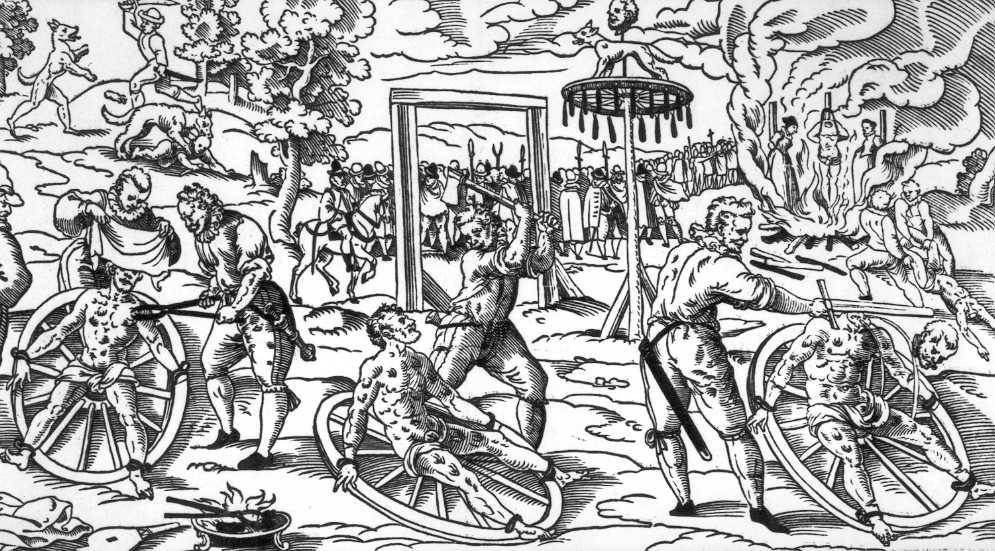
The Act
The condemned was tied to a cartwheel or similar frame. Executioners systematically shattered the limbs and joints with an iron bar or hammer, often beginning at the extremities and working inward. The broken body was then sometimes displayed on the wheel. Death could take hours. The method was used for particularly severe crimes and served as a public deterrent.
The Response
The practice was gradually abolished across Europe during the Enlightenment and early modern period as judicial systems moved away from spectacular corporal punishment toward more standardized penalties. It survives in historical record and art as an emblem of pre-modern cruelty.